Guide: skin health basics
Skin Health Basics: What Shapes How Skin Looks, and Where Nutrition Fits
Skin is shaped mostly by things a supplement cannot change: genes, sun exposure, age, hormones, sleep, medicines and skin conditions. Nutrition is one part, and dermatologists advise getting nutrients from a balanced diet and taking supplements only for a reason. A new rash, a changing mole or a persistent problem deserves a dermatologist, not a vitamin.
Written by the Gelagen label deskUpdated
What shapes skin01
What affects how your skin looks and feels?
Sun exposure, genes, age, hormones, medicines, sleep, stress, skin care and skin conditions all shape skin, and food and supplements are only one part.
The list below sets out the main drivers, with the plain fact each public source gives. Tap through them in order of how much control you have.
- Sun and tanning bedsCDC: most skin cancers are caused by too much exposure to ultraviolet rays from the sun and tanning beds. NIH ODS calls UV exposure the most preventable cause of skin cancer. (CDC, Skin cancer prevention) (NIH ODS, Vitamin D)
- SunscreenAAD recommends a broad-spectrum, water-resistant sunscreen of SPF 30 or higher; CDC names SPF 15 or higher as the minimum. (AAD, How to select sunscreen) (CDC, Skin cancer prevention)
- Water and fluidsCDC says daily water needs vary by age, sex, activity level, pregnancy and heat, and that foods with high water content count too. (CDC, Water and healthy drinks)
- A balanced dietAAD: most people can get the vitamins and nutrients they need from a well-balanced diet, and supplements help mainly when a doctor finds a deficiency. (AAD, Supplement myths) (AAD, Supplements for your skin)
- Medicines and health conditionsMedlinePlus lists thyroid problems, poor nutrition, some medicines, stress and aging among causes of hair loss; the cause decides the treatment. (MedlinePlus, Hair loss)
- Talking to a dermatologistAAD advises talking with a board-certified dermatologist about underlying conditions before starting supplements for skin, hair or nails. (AAD, Supplement myths)
Notice that most of the list is not a nutrient. A person with a vitamin shortage is the exception, not the rule. That is why a skin supplement is a weak first step for most people, and why the American Academy of Dermatology tells readers to talk to a board-certified dermatologist before using supplements for skin, hair or nails (AAD, Supplements for your skin).
The biggest lever02
How much does the sun matter for skin?
A great deal: CDC says most skin cancers are caused by too much ultraviolet exposure from the sun and tanning beds (CDC, Skin cancer prevention).
Sun also drives much of what people call aging in skin, such as spots and rough texture, which is why dermatologists put sun protection ahead of any pill. The practical steps are shade, clothing that covers, a wide-brimmed hat, sunglasses and sunscreen. The AAD recommends a broad-spectrum, water-resistant sunscreen with SPF 30 or higher on all exposed skin (AAD, How to select sunscreen). The healthy skin habits guide sets out a simple routine. Skin also changes with age and with hormones, which no routine fully offsets, and a realistic goal is healthy skin, not skin that looks the way it did ten years ago.
Where nutrition fits03
Does what you eat change your skin?
Poor nutrition can affect skin, hair and nails, but for most people eating a balanced diet covers the need, and the AAD advises getting nutrients mainly from food (AAD, Supplements for your skin).
| Statement | Supported? | Source note |
|---|---|---|
| A severe vitamin shortage can harm skin, hair or nails | Yes | For example scurvy from lack of vitamin C (NIH ODS, Vitamin C) |
| Most people get enough vitamins from a balanced diet | Yes | AAD (AAD, Supplement myths) |
| Extra biotin improves healthy hair, skin or nails | Not shown | At best case reports and small studies (NIH ODS, Biotin) |
| Supplements for hair, skin and nails are proven | No | AAD (AAD, Supplement myths) |
| Very large doses are risky | Yes, for some nutrients | AAD advises avoiding extremely large doses |
The practical reading is simple: eat well first, test a deficiency if you suspect one, and treat a supplement as an add-on that needs a reason.
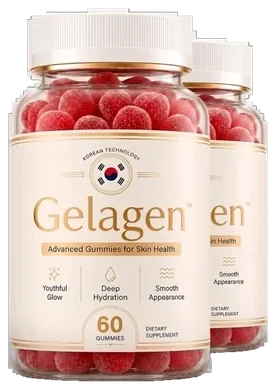
Gelagen Gummies: from $49 a jar60 gummies a jar · 2, 3 or 6 jars · 60-day guarantee as listed
See packsWhen to see a professional04
When should you see a dermatologist instead of trying a supplement?
See a dermatologist for a new or changing mole, a rash that does not clear, sudden hair loss, painful or spreading skin changes, or anything that worries you.
- Hives or a rash after a gummyStop taking the product and call your doctor or pharmacist. Report the problem to FDA through MedWatch.
- Stomach upset that does not settleNausea, cramps or diarrhea can happen with supplements. Stop and ask a clinician if it lasts.
- Blood test results that do not fitIf a thyroid or heart test looks wrong for how you feel, tell the clinician about the biotin. FDA says biotin can distort troponin results.
- Call 911Swelling of the face, lips or throat, trouble breathing, or chest pain needs 911 now. A supplement is never a reason to wait.
Signs from (FDA, Q&A on Dietary Supplements) (FDA, MedWatch) (FDA, Biotin and troponin tests). This list is not complete, and a supplement is never a reason to wait.
A vitamin cannot diagnose a mole or treat a rash. A delay while you wait for a supplement to work can be the costly part. If your concern is acne, eczema or a scaling patch, effective treatments exist, and a dermatologist can pick one.
In context05
Where does a product like Gelagen fit?
As an optional add-on for an adult with a reason, after sun protection, diet and a conversation with a clinician, and not as a substitute for any of them.
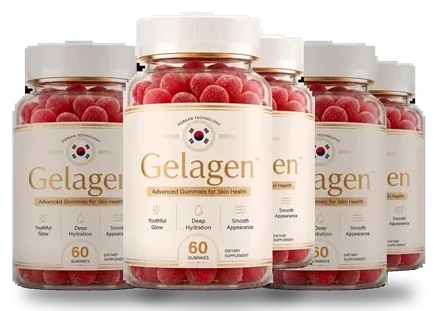
Gelagen lists 13 named nutrients and no collagen, and its jar uses feeling words that no study has tested. Read the claims versus evidence page to see how each claim fares, and the label math page to see the amounts. If you take it, remember the biotin can distort lab tests.
Do not stop or change a prescribed skin or other medicine because of a supplement. Call 911 for swelling of the face or throat or trouble breathing after taking a gummy.
FAQ06
Gelagen questions people ask
What is the biggest cause of skin aging?
Sun exposure is a leading cause of visible skin aging and of skin cancer, according to CDC and AAD. Daily sunscreen, shade and covering clothes protect skin better than any supplement.
Do vitamins make skin glow?
A shortage of a vitamin can dull or harm skin, and fixing a real shortage helps. For people who are not short, no source we found shows that extra vitamins make skin glow.
How much water should I drink for good skin?
CDC says water needs vary with age, sex, activity, pregnancy, breastfeeding and heat, and that foods with high water content also count (CDC, Water and healthy drinks). We found no source giving a skin-specific amount.
Does stress affect skin?
Many people notice it, and skin conditions can flare with stress. Our sources do not quantify it, so we do not give a number. A dermatologist can discuss how stress and skin interact in your case.
Is a skin supplement better than a good moisturizer?
They do different things. A moisturizer acts on the skin's surface, while a supplement acts through the body. Neither has proof of reversing aging. Ask a dermatologist what suits your skin type.
Should teenagers take skin vitamins?
Ask a pediatrician or dermatologist first. Acne and other teen skin issues have effective treatments, and a supplement is not one of them. Gelagen is described for adults 18 and over.
Who wrote this07
Written and reviewed by
Pages built from the brand's product sheet, the jar renders and linked NIH, FDA, CDC, FTC and dermatology-society sources.
Last updated . Read our editorial standards and how we check reviews. This website is the information site for a USA Authorized Gelagen Retailer. It is not the manufacturer or the distributor. We earn money when you buy through our order links.
Sources and links (12)
- Skin Cancer Prevention Centers for Disease Control and Prevention, 2026
- Vitamin D: Fact Sheet for Health Professionals NIH Office of Dietary Supplements, 2026
- How to Select a Sunscreen American Academy of Dermatology, 2025
- Water and Healthier Drinks Centers for Disease Control and Prevention, 2026
- Supplements: Debunking Common Myths American Academy of Dermatology, 2024
- Supplements for Your Skin American Academy of Dermatology, 2025
- Hair Loss MedlinePlus (NIH), 2025
- Vitamin C: Fact Sheet for Health Professionals NIH Office of Dietary Supplements, 2026
- Biotin: Fact Sheet for Health Professionals NIH Office of Dietary Supplements, 2026
- Questions and Answers on Dietary Supplements U.S. Food and Drug Administration, 2026
- MedWatch: The FDA Safety Information and Adverse Event Reporting Program U.S. Food and Drug Administration, 2026
- Biotin Interference with Troponin Lab Tests - Assays Subject to Interference U.S. Food and Drug Administration, 2022
Keep reading
More about Gelagen

USA Authorized Gelagen Retailer
Ready to try Gelagen?
Check your medicines first, especially blood thinners and thyroid medicine, and tell the lab about the biotin before any blood test. Then pick a pack. Six jars cost the least per jar; every pack carries the 60-day guarantee as listed (confirm at checkout).
- Checkout on the sales site
- 60-day guarantee as listed
- Shipping shown at checkout